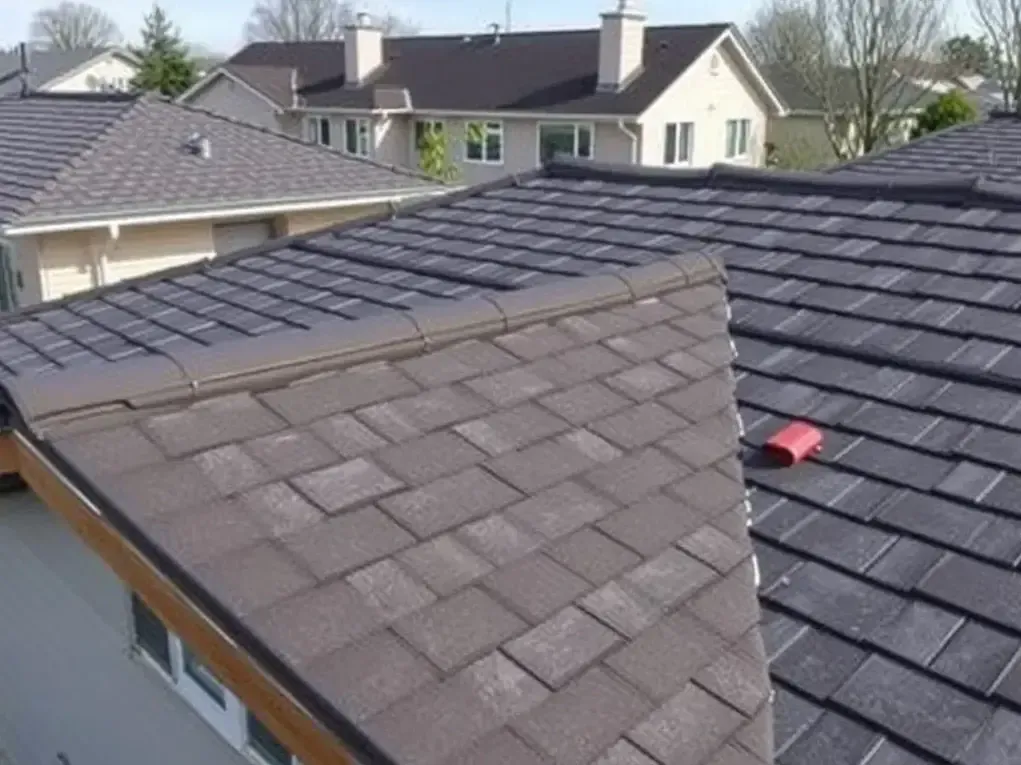
What Roofing Work in San Ramon Includes
Scope starts with a roof inspection. A roofer walks the pitch, checks decking and sheathing, and maps every flashing detail before quoting.
A roof estimate should itemize tear-off, disposal, and materials by roofing square—not one lump number. Get it in writing.
Tear-off means removing old shingle, felt, and nails down to the roof deck. A dumpster and debris hauling follow.
Old layers add weight, so most jobs strip to bare plywood or OSB.
Material choice drives labor. Asphalt shingle and three-tab shingle go fast; clay tile and slate take longer and need careful handling.
A standing-seam panel or metal panel job changes how fasteners and clips are set.
Waterproofing details matter most. Underlayment laps, drip edge at the eave, and proper valley weave keep the roof dry.
Ventilation—soffit vent paired with ridge vent—drops attic heat and protects the deck.
Access and safety are part of scope. Scaffold or ladder placement, anchor points, and fall protection are planned before the first pry bar swings.
Roofers use a nail gun and air compressor for speed but hand-set fasteners at edges and flashings.
A torch or roof cement handles modified bitumen and small repairs on low-slope sections.
Cleanup includes magnet sweeping the yard for stray nails, clearing the driveway, and confirming gutters flow. A final walk-through checks ridge cap, fascia, and soffit lines.
- Strip old roofing to deck; inspect sheathing for rot
- Install synthetic underlayment and ice-and-water shield in valleys and eaves
- Set new flashing: step, counter, chimney, and pipe boot
- Lay shingle, tile, or metal panel; cap the ridge with ridge vent
- Clean gutters, downspouts, and haul all debris