Home Services
Locations AlamoBrentwoodConcordDanvilleLafayetteMartinezNewarkOrindaPittsburgPleasant HillSan Ramon
About Reviews Contact (925) 503-1377

Roofing in Newark, CA

Newark's roofing story starts with the ground it sits on.

At roughly 20 feet of elevation in Alameda County, the city drains toward Newark Slough, and winter storms test every roofline near the water.

Licensed & Bonded and fully insured
Written Estimates
Local to Newark
Workmanship Warranty

Homes in Cherry Grove and Mayhews Landing often date to the 1950s and 1960s.

Those single-story ranch roofs are low-slope in places and original decking is common. A roofer inspecting them looks hard at sheathing, fascia and eave edges.

Neighborhoods like Birch Grove and Foxborough were built in the 1980s and 1990s.

Two-story tract homes there carry pitched roofs with asphalt shingle or architectural shingle coverings now reaching replacement age.

Newer Spanish-style and craftsman developments near Thornton Park use concrete tile and clay tile.

Those roofs fail differently: broken tiles and tired underlayment rather than worn shingle granules. Climate drives the wear pattern.

Hot, dry summers bake sealant strips and dry out roofing felt until wind lifts tabs. Delta breezes work the ridge and rake edges loose over time.

Foggy mornings near the bay keep the rooftop damp longer. That moisture finds tired pipe boots and chimney flashing before it finds anything else.

Heavy winter rainstorms expose the real problems. Ponding at low spots, clogged gutter and downspout runs, and backed-up valleys all show up in January.

Common failure modes here include:

  • Sun-cracked pipe flashing and boot flashing on older ranch roofs
  • Lifted or missing shingle after wind events along exposed ridges
  • Failed underlayment beneath tile that looks fine from the street
  • Water intrusion at valleys and step flashing after heavy storms

Flooding from Newark Slough adds another layer. Homes near the refuge and slough corridors need drainage and weatherproofing checked as often as the covering itself.

A roof inspection after a big storm is worth more than a guess from the driveway.

So is a roof estimate that separates covering from decking before work begins.

1

What Roofing Work in Newark Includes

Scope begins with a roof inspection, not a sales pitch.

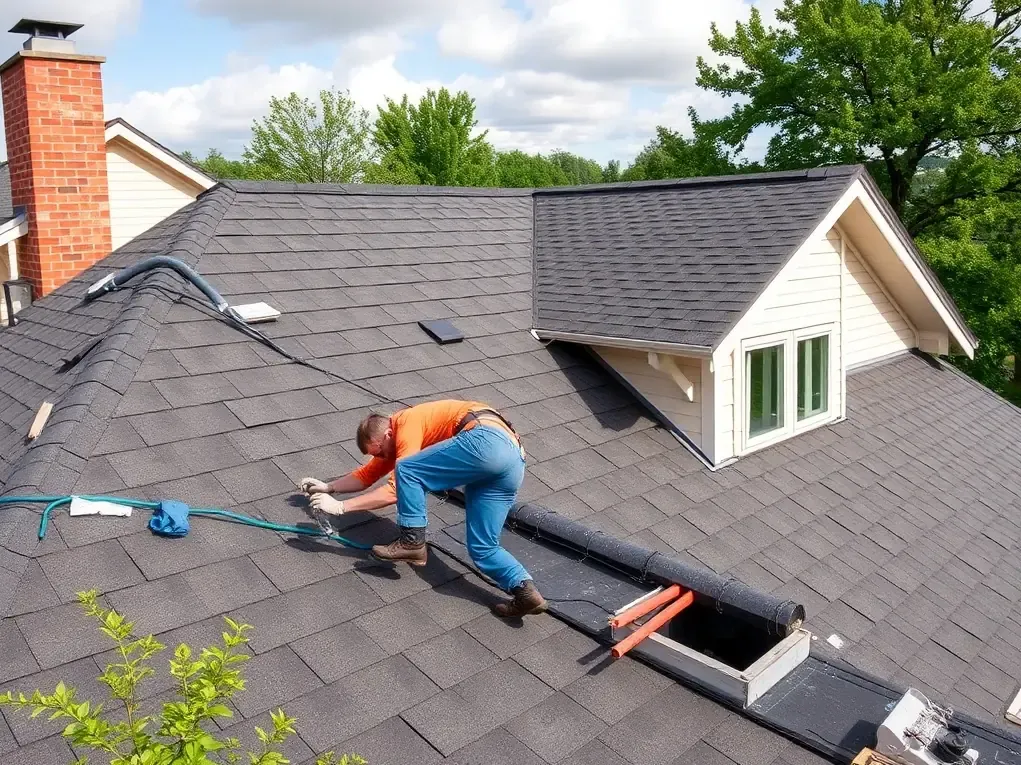
A roofer walks the rooftop, checks the attic side, and documents what the decking actually looks like.

Inspection covers the roof deck, sheathing and truss or rafter framing where visible. Fasteners, flashing and ventilation get the same attention as the covering.

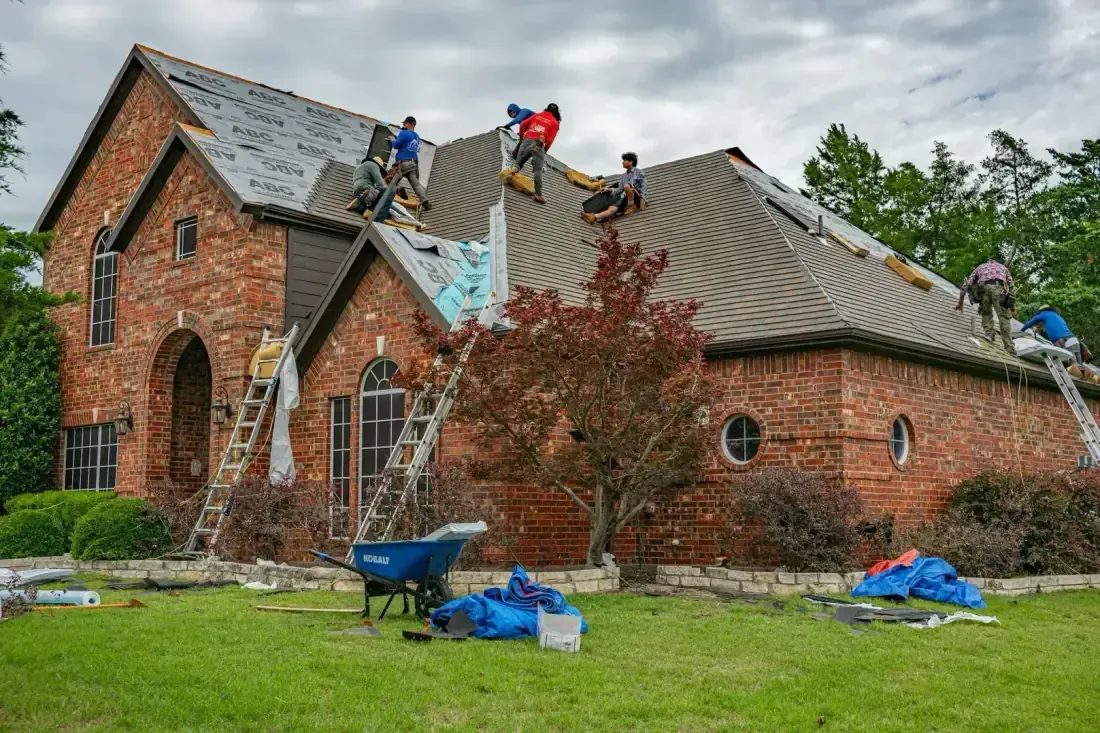
Tear-off follows. Crews strip the old covering to the substrate, then inspect plywood or OSB for soft spots before anything new goes down.

Material scope depends on the roof. Pitched roofs take asphalt shingle, architectural shingle or three-tab shingle. Tile roofs get tile reset or replacement over new underlayment.

Low-slope sections may call for membrane work: TPO, EPDM or PVC membrane, or a built-up roof with modified bitumen.

The layering process is where quality lives:

Tools on site tell you the scope is real.

Expect a pry bar, roofing shovel, nail gun, air compressor and enough roofing square coverage to match the bid.

Ventilation and insulation belong in scope too. Soffit vent intake paired with ridge vent exhaust keeps the attic from cooking in July.

Cleanup is part of the job, not an afterthought. A dumpster gets placed, debris gets magnet-swept, and gutter and downspout runs get checked for nails.

Walnut Creek Roofers does not perform this work. The site explains scope so homeowners can compare bids honestly.

  • Ice-and-water shield at eaves and valleys
  • Synthetic underlayment over the field
  • Drip edge at the eave and rake
  • Step flashing and counter-flashing at walls and chimneys
  • Ridge cap and ridge vent at the top
2

Quality & Materials Standards

Good roofing starts with the substrate, not the shingle. Decking gets re-nailed or replaced where it flexes, and every fastener or screw gets set flush.

California building code governs how flashing, ventilation and fastening are done. A roofing contractor should be able to point to the code basis for a repair.

Underlayment choice matters in Newark's heat. Synthetic underlayment outlasts roofing felt, and ice-and-water shield belongs at valleys and eave edges regardless of snow.

Some details exist for wind and rain here, not snow.

Still, a snow guard or anchor point gets discussed when the roofline has steep sections worth securing.

Roof shapes affect scope. A hip, gable, mansard or gambrel roof changes how flashing and ventilation are laid out.

So do small features like a canopy or awning.

Vapor barrier placement and insulation levels get checked from the attic side. An attic fan is no substitute for balanced ventilation.

Edge details fail first in this climate. Verge trim, coping and fascia all get inspected alongside the drip edge and soffit.

On steep or unusual sections, purlin and batten or counterbatten systems may support tile or metal panel.

Torch-down work on modified bitumen is standard for low-slope transitions.

Small materials carry real weight:

Insurance vocabulary stays honest. Storm damage claims need photos, dates and a clear description of what failed. Documentation beats adjectives.

A written roof estimate should separate tear-off, decking repair, materials and cleanup. Anything bundled into one line deserves a question before signing.

  • Roof cement and mastic for spot sealing, never as a permanent fix
  • Sealant and adhesive applied to manufacturer spec
  • Proper boot flashing at every pipe penetration
3

Seasonal and Storm Exposure in Newark

Newark’s roof weather runs on two gears.

Summer delivers hot, dry days tempered by the Delta breeze, then marine fog rolls in off the bay most mornings.

That wet-dry rhythm works asphalt shingle, wood shake, and tile at their edges and fasteners.

UV bakes the south and west slopes first. Fog keeps north slopes damp until late morning, feeding moss and mildew along the roof.

By August, three-tab shingle granules thin on sun-facing planes. Architectural shingle on newer tracts holds longer, yet sealant strips soften in repeated heat cycles.

The first heavy winter rainstorm is the real test. A decade of dry summers leaves cracks, lifted flashing, and dried caulk.

Water finds every gap at once.

The Newark Slough adds a second pressure. Winter storms and high water push humidity up under low eaves.

Rooftop ventilation matters as much as the covering above.

Watch for standing water at the eave, damp decking around chimneys, and granules collecting in gutters after wind.

Inspection timing follows the pattern:

Book a roof inspection in fall, ideally September or October. Catching a loose flashing or worn boot flashing before the first storm saves interior damage.

  • Late spring: check shingle, ridge cap, and pipe boot condition before summer heat.
  • Early fall: clear debris, reseal flashing, and confirm gutter flow before rain.
  • After any major storm: look for lifted shingle, cracked tile, or wet ceiling stains.
4

Local Service Areas

Cherry Grove

Cherry Grove’s mid-century single-story ranch homes from the 1950s and 1960s carry original or once-replaced roof systems.

Aging three-tab shingle and wood shake dominate here, and both fail quietly.

Mayhews Landing

Mayhews Landing sits closest to the slough and bay influence, so fog and winter humidity hit hardest.

Expect older ranch stock with modest pitch and long, shallow roof planes.

Newark Gardens

Newark Gardens mixes 1950s ranch homes with later infill, so roof ages vary block to block. Inspectors here often find patchwork repairs layered over original decking.

Birch Grove

Birch Grove’s 1980s and 1990s two-story tract homes brought steeper gables and more complex rooflines. These roofs are now at or past expected service life.

Foxborough

Foxborough blends established tract homes with newer Spanish-style and craftsman-influenced builds. Tile and metal now share the neighborhood with shingle.

Thornton Park

Thornton Park’s newer developments favor modern Spanish-style and craftsman designs with varied rooflines. Newer does not mean maintenance-free, especially near the bay fog.

  • Original plywood sheathing softens around penetrations where pipe flashing has dried out.
  • Low-slope sections often hide a built-up roof under shingle, with tar and roofing felt at the end of life.
  • Short eave overhangs let wind-driven rain reach fascia and soffit boards.
  • Aluminum gutter runs collect granule debris and back up at the downspout.
  • Small dormer and canopy additions create valleys that trap debris.
  • Morning fog keeps north slopes wet, encouraging moss on asphalt shingle.
  • Flood-prone winters push moisture into eave cavities and attic insulation.
  • Old tar paper underlayment has likely degraded beneath the shingle.
  • Chimney flashing and step flashing at additions are common leak points.
  • Poor attic ventilation lets condensation build on the roof deck.
  • Mixed shingle vintages mean mismatched three-tab and architectural shingle planes.
  • Reused rafters and joist ends may show rot under old leaks.
  • Low pitch on rear additions invites ponding and worn membrane.
  • Skylight and vent boot seals dry and crack within a decade.
  • Ridge vent and soffit vent balance is often wrong after remodels.
  • Steep gable and hip planes shed water fast but stress ridge cap and valley flashing.
  • Builder-grade shingle is thinning on west-facing slopes.
  • Second-story rake edges take wind uplift during winter storms.
  • Fascia and soffit on upper floors weather faster from sun exposure.
  • Fastener and nail back-out appears on older plywood roof deck panels.
  • Clay tile and concrete tile need underlayment replacement before the tile itself fails.
  • Standing-seam panel and corrugated panel roofs require fastener and sealant checks.
  • Spanish-style parapet walls and coping collect water at the wall base.
  • Craftsman porch roofs and awning details hide small leak zones.
  • Tile roofs need a roofer who understands tile-safe walking and repair.
  • Complex hip and gable intersections create many valley and flashing details.
  • Synthetic underlayment under tile still needs periodic inspection.
  • Dormer and skylight penetrations rely on boot flashing and sealant.
  • Decorative mansard and gambrel accents need dedicated waterproofing checks.
  • Gutter and downspout sizing can fall short in heavy winter rain.

What We Do in Newark

Full-service roofing for Newark homeowners:

Explore Nearby Communities

Roofing work across Newark and the surrounding area.

Questions about a specific street, roof type or shared-wall detail? Call (925) 503-1377 and describe the property.

Roofing in Newark?

Roofing Reference Images in Newark

Roofing work in Newark, CA — photo 1 Roofing work in Newark, CA — photo 2 Roofing work in Newark, CA — photo 3